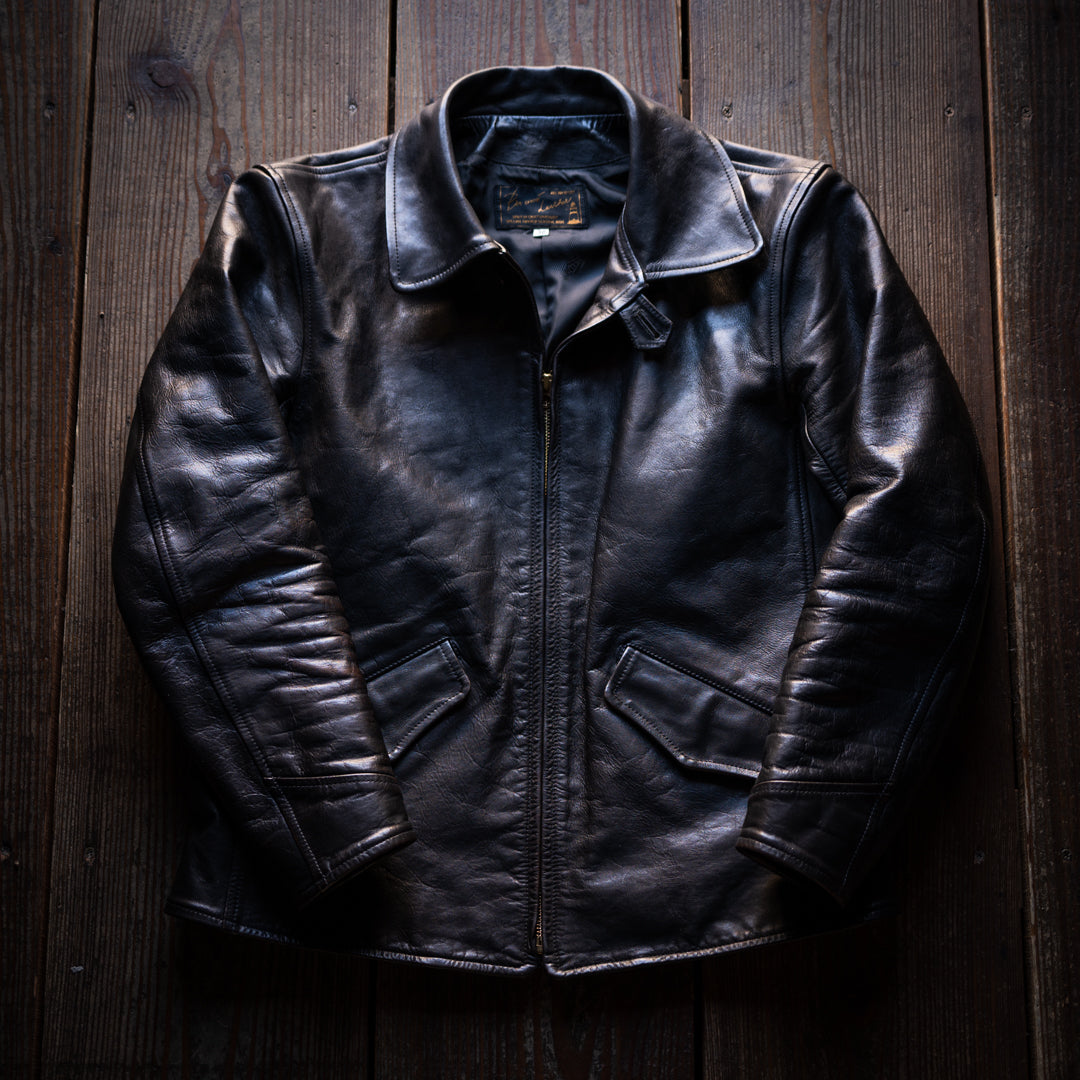


BONCOURA 1st Jacket 43 WWⅡ Natural Indigo Dye 15th Anniversary Model
BONCOURA 1st Jacket 43 WWⅡ Natural Indigo Dye
15th Anniversary Model
Release date: January 24, 2026. Pre-orders are currently being accepted (deliveries will be made after January 24, 2026).
The seeds sown in spring grow rapidly and reach peak harvest in summer. 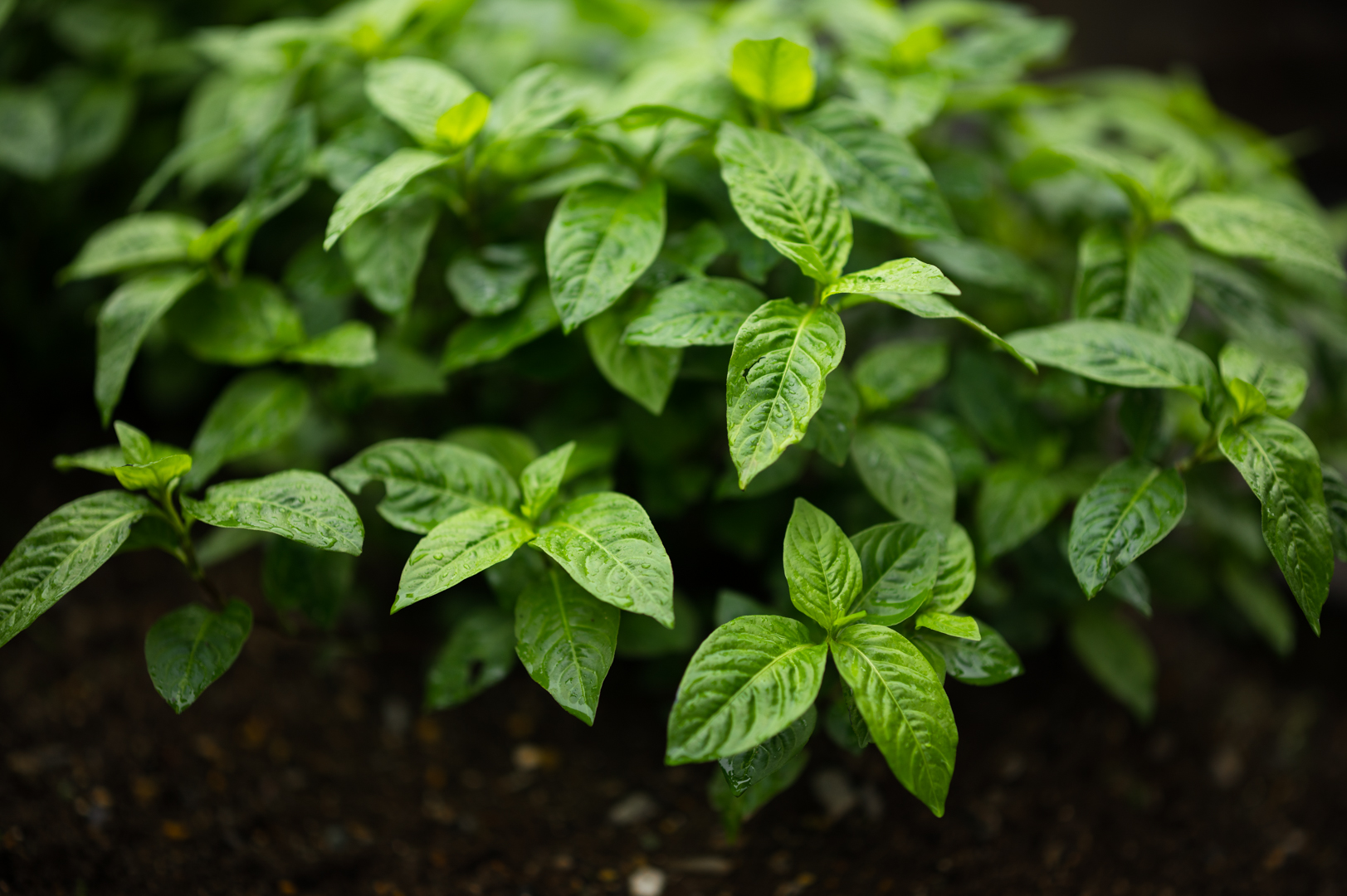
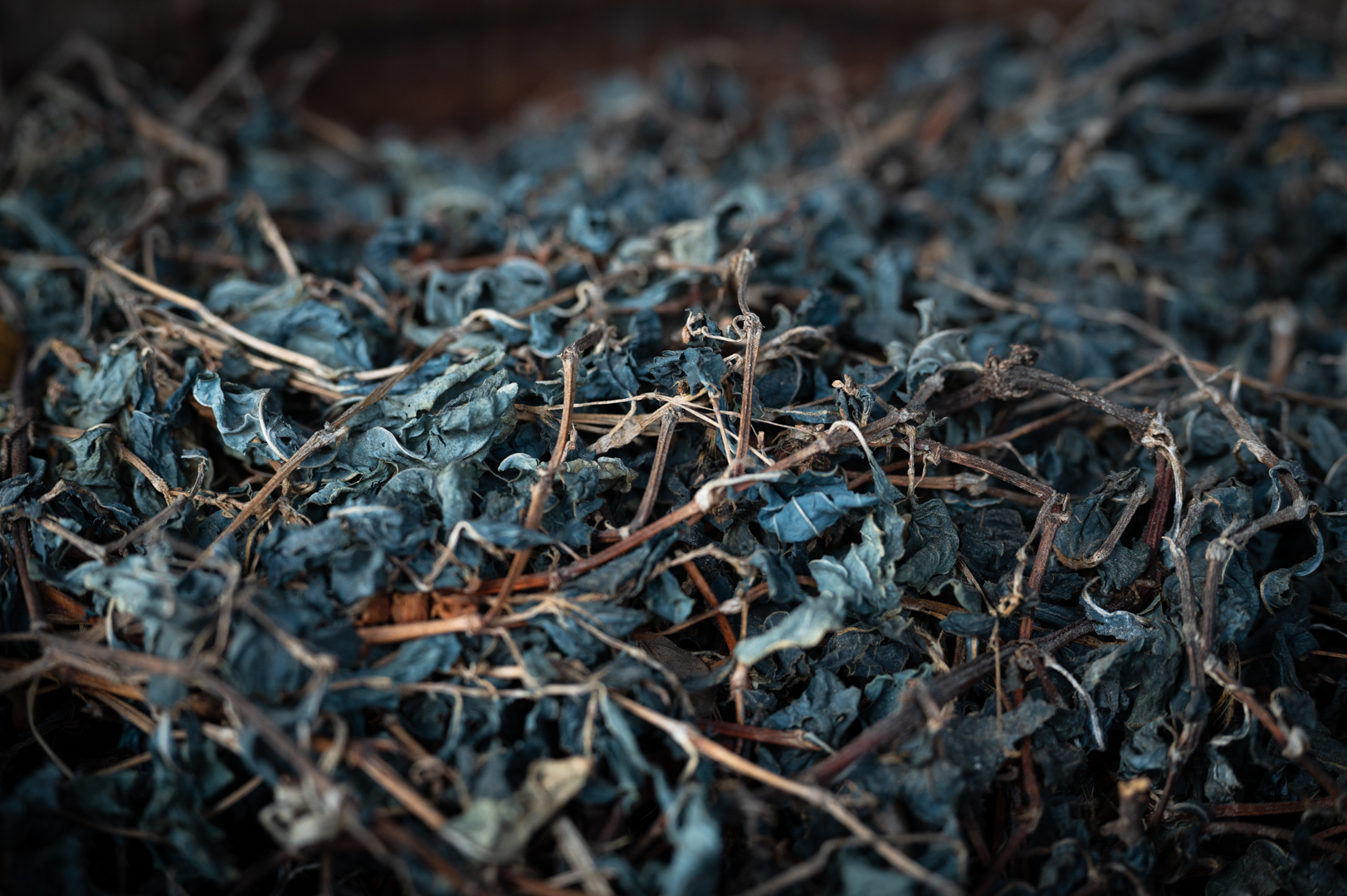
After being harvested and dried, the indigo goes through a fermentation process and is transformed into sukumo, the raw material for dyes.
It takes a long time, 3 to 4 months, to complete the process, and during that time the temperature and humidity are controlled and the condition is monitored by artisans every day.
The process of creating dye liquid from the finished sukumo is also delicate.
Indigo is a living thing, and if the temperature or pH is not properly controlled, the desired color will never appear.

Dyeing is finally possible when a sufficient amount of dense bubbles called "indigo flowers" appear on the surface of the dye solution.
A fusion of ancient traditions and modern techniques.
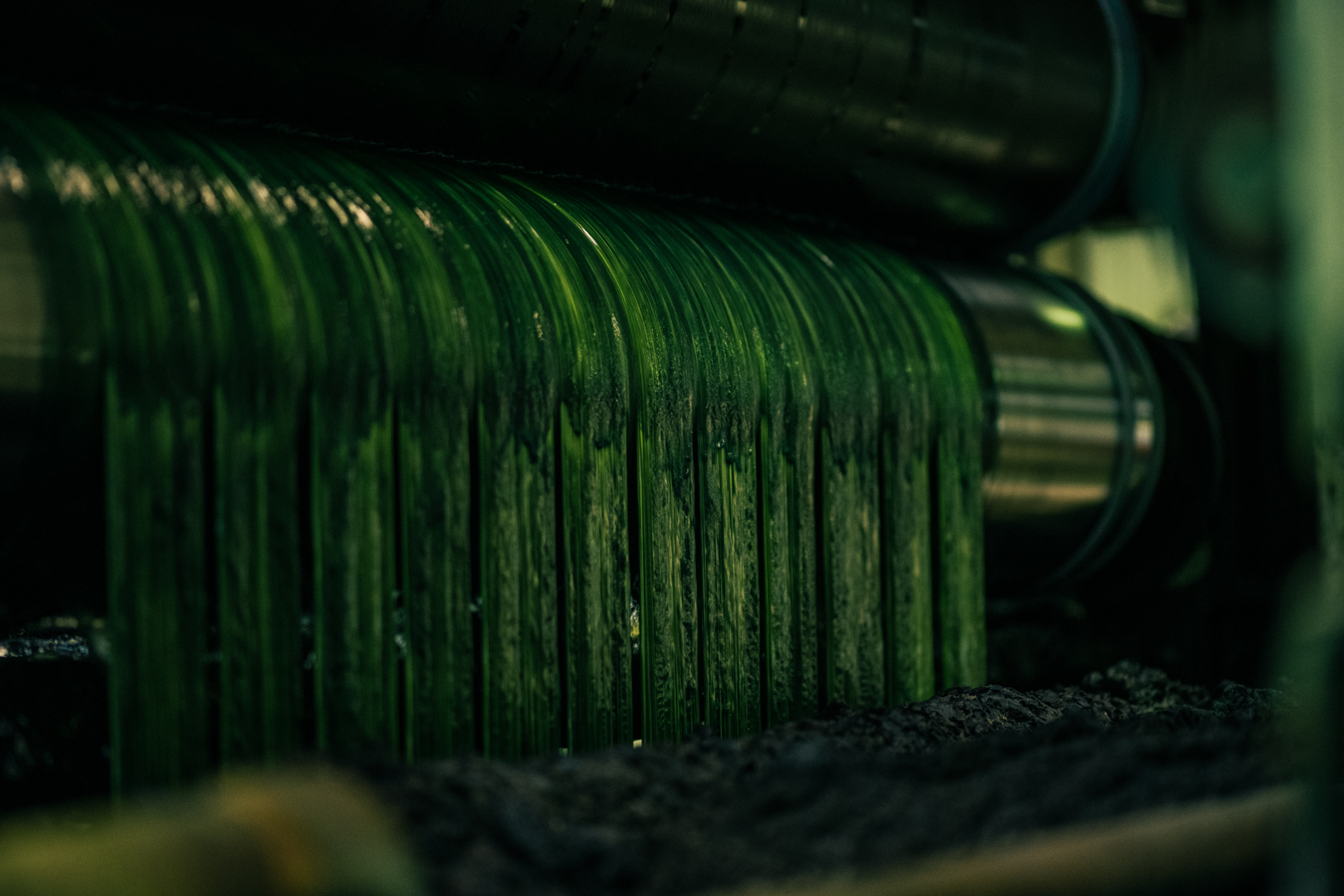
Genuine indigo dyeing usually uses a technique called "kase dyeing."
Kase dyeing is a method in which the indigo color is applied to threads by dyeing them repeatedly by hand, and the darker the dye is, the deeper the indigo penetrates into the core of the thread.
While skein dyeing produces the beautiful patina that only skein dyeing can achieve, it is less likely to produce the whiskers and creases that are typical of denim.
At BONCOURA, we are particular about rope dyeing, which leaves the center of the thread white, in order to maximize the enjoyment of denim, which is the changes that occur over time and the creases that appear over time.
Medium white dyeing using rope dyeing.
The beautiful indigo color and the natural off-white threads of Ike cotton will appear as whiskers and creases as you wear it. 

However, genuine indigo sukumo is more expensive than synthetic indigo, and the darker the dye, the higher the cost.
Furthermore, indigo contains more impurities than pure indigo, making it difficult to dye, so the dyeing process must be repeated over and over again, more than doubling the amount of work required.
Due to these cost considerations, some companies mix synthetic indigo with genuine indigo to produce a deeper color and sell the resulting mixture as genuine indigo.
It is difficult to tell the difference once the dyeing is complete, but as the color fades with wear, a clear difference in the vividness of the color becomes apparent.
As BONCOURA, we couldn't just make something that was half-heartedly strong.
In order to get closer to the dye concentration that he had set for himself, he worked with artisans through repeated trial and error, and finally achieved a depth and vividness that he was satisfied with.
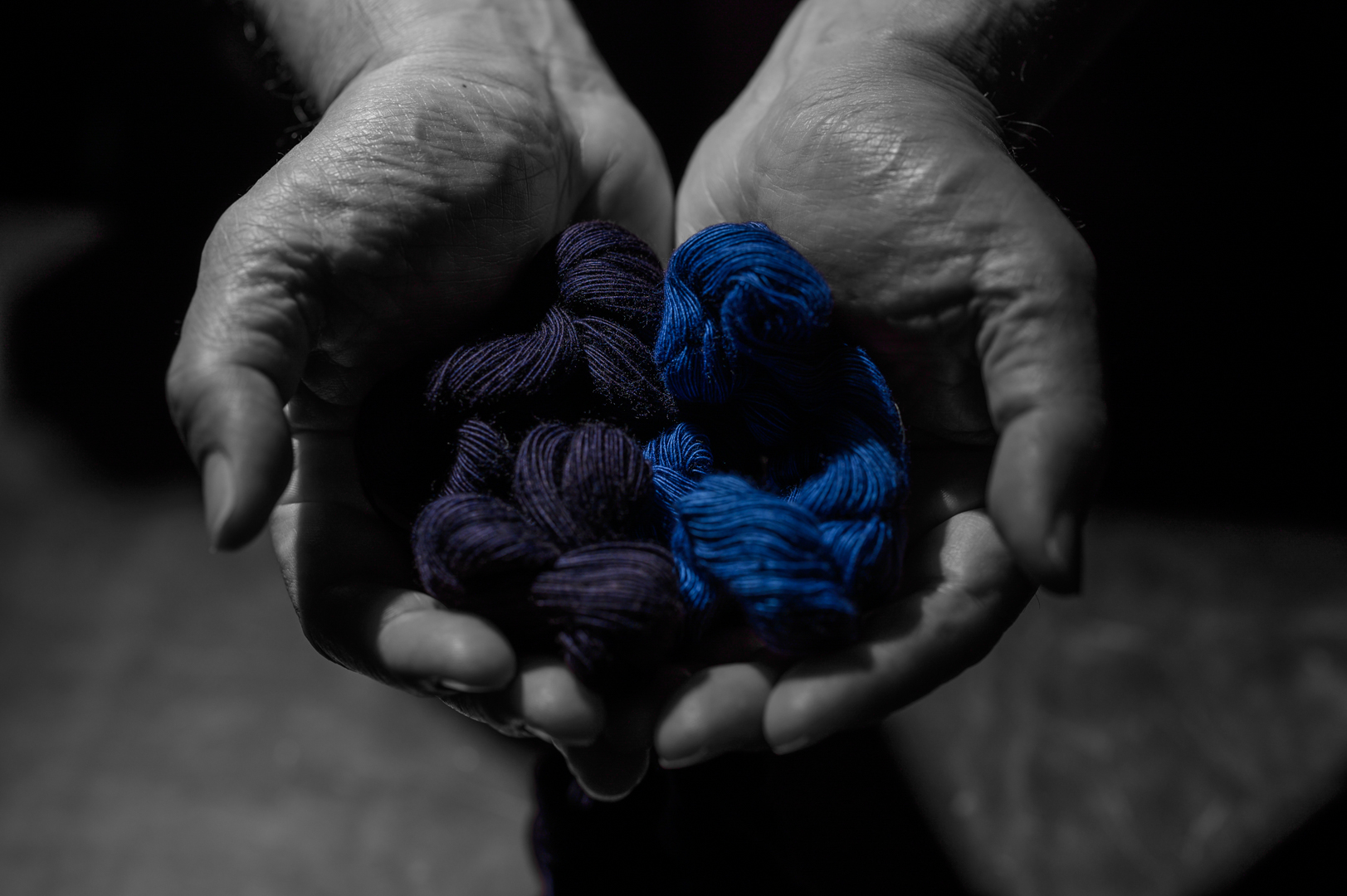
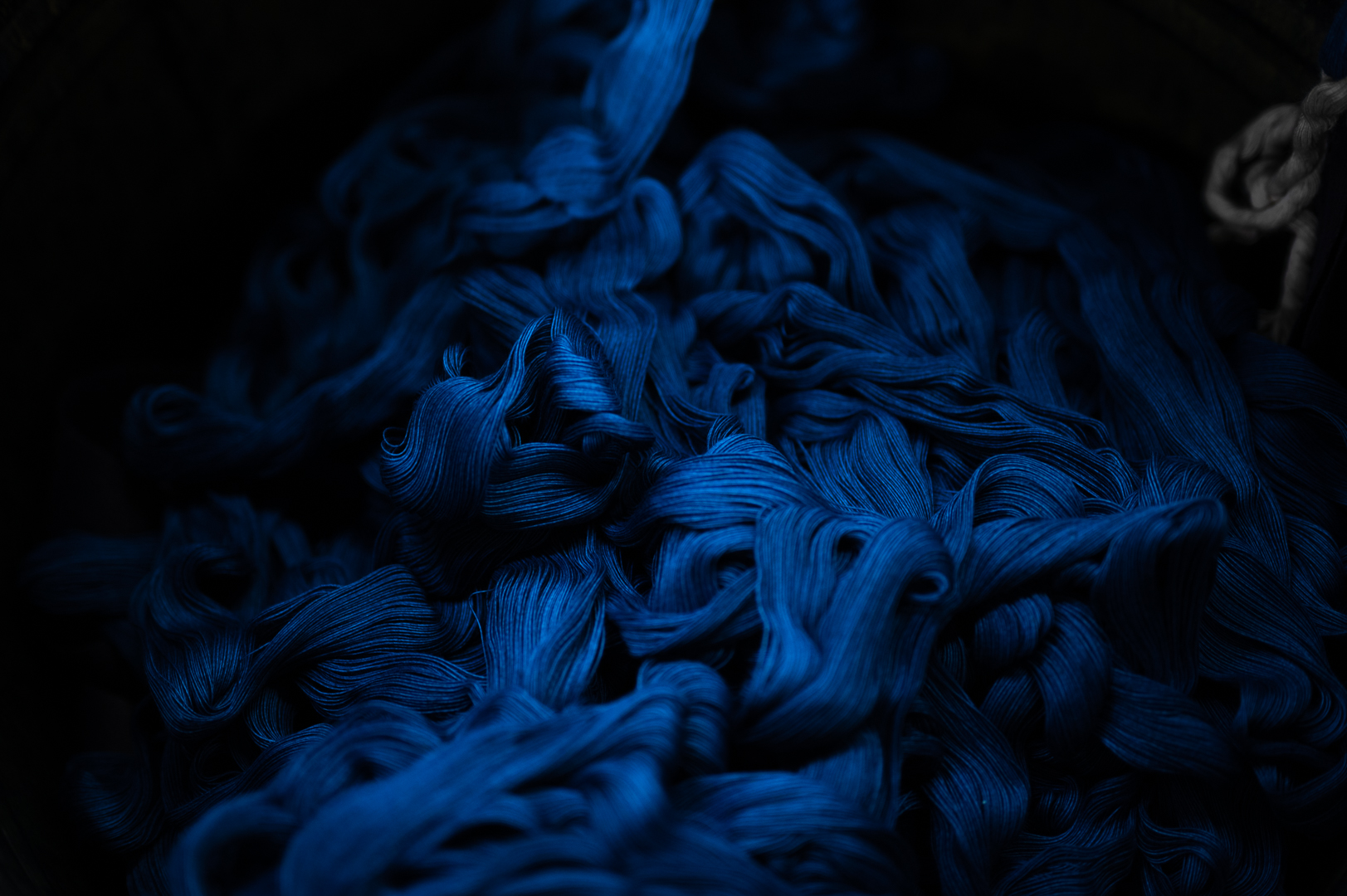
The one on the right has been dyed several times, showing the vivid color that is unique to indigo.
By layering it multiple times, we were able to achieve a color that could be described as dark blue, as shown on the left.
 100% genuine indigo.
It is oxidized by oxygen in the air, changing from a slightly greenish color to a vibrant blue.


An old-fashioned power loom brought to life.
At first glance, the weaving process appears to be left to machines, but in reality, it would not be possible without the presence of skilled craftsmen who make repeated adjustments while assessing the loom's quirks and the condition of the thread.


From cotton selection and blending to spinning, dyeing, and weaving, every step of the process is carefully controlled to create BONCOURA’s original denim.
All stitching is done using cotton thread, with thread count and sewing specifications adjusted according to each area of the garment.
The leather patch is made from deerskin that has been specially tanned from raw hide, and the size tab is individually stamped using a vintage typewriter–style stamp.
The BONCOURA 1st Jacket 43 WWⅡ Natural Indigo Dye takes the wartime model produced for our 10th anniversary as its point of departure.
By layering an additional five years of accumulated craftsmanship with our present-day interpretation, the jacket has been carefully brushed up and refined as a 15th anniversary model.

Rather than simply following the earlier WWⅡ model, we revisited original references and historical records, reexamining the rugged atmosphere and austerity born from wartime conditions.
Through BONCOURA’s lens, each detail has been thoughtfully reconsidered and reconstructed.

In terms of details, the front pocket flaps—one of the defining elements of this era—have been deliberately omitted.
The number of front buttons has also been reduced by one, reflecting the simplification that occurred under material restrictions during wartime, allowing the historical background to appear naturally in the structure of the garment.


The stitching primarily uses yellow thread, with touches of orange added selectively.
During the war, there was little room for decorative choices such as color variation; instead, available materials were simply used as they were.
This color balance subtly reflects that reality.
On the inside, the front placket utilizes the selvedge edge of the denim itself, while the pocket lining is printed with the kanji for “indigo” to commemorate the 15th anniversary.
It is in these unseen areas that BONCOURA has embedded its approach to materials, along with the intent and significance behind this milestone model.

The buttons are newly designed iron donut buttons, created specifically to realize this jacket.
Rooted in the utilitarian philosophy of simple metal buttons from the period, they have been reinterpreted through BONCOURA’s perspective and stand as a defining detail of this piece.
Ruggedness and calculated beauty—both qualities BONCOURA is known for—are brought into careful balance here.
This jacket represents a new form of the WWⅡ model, one that could only be reached after fifteen years of continued dedication to craftsmanship.
Caution: Our cinch backpack is inspired by needle-punched types from the 1930s and is made from original parts created from molds. The needle tips are sharp, so there is a risk of injury or damage to furniture, etc.
Additionally, using the buckle's needle without penetrating the fabric may result in unstable fastening and lead to needle damage. When using, it is recommended to always penetrate the fabric and fasten the buckle.
One wash sales size chart is one wash.
| Size | Length | Shoulder | Chest | Hem Circumference | Sleeve Length | Cuff Opening | Sleeve Width | Collar Width | Cuff Width |
| 36 | 57.8 | 50 | 117 | 109 | 59.8 | 11.4 | 25.7 | 9 | 5.5 |
| 38 | 59.4 | 51 | 121 | 112 | 61.7 | 11.7 | 26.3 | 9 | 5.5 |
| 40 | 61.4 | 52.2 | 124 | 115.6 | 63 | 12.2 | 26.5 | 9 | 5.5 |
| 42 | 63.2 | 54 | 128.4 | 120 | 65 | 12.6 | 27 | 9 | 5.5 |
| 44 | 65 | 55 | 133.4 | 124 | 66 | 13 | 27.8 | 9 | 5.5 |
| Size | Length (in) | Shoulder (in) | Chest (in) | Hem Circumference (in) | Sleeve Length (in) | Cuff Opening (in) | Sleeve Width (in) | Collar Width (in) | Cuff Width (in) |
| 36 | 22.8 | 19.7 | 46.1 | 42.9 | 23.5 | 4.5 | 10.1 | 3.5 | 2.2 |
| 38 | 23.4 | 20.1 | 47.6 | 44.1 | 24.3 | 4.6 | 10.4 | 3.5 | 2.2 |
| 40 | 24.2 | 20.6 | 48.8 | 45.5 | 24.8 | 4.8 | 10.4 | 3.5 | 2.2 |
| 42 | 24.9 | 21.3 | 50.6 | 47.2 | 25.6 | 5 | 10.6 | 3.5 | 2.2 |
| 44 | 25.6 | 21.7 | 52.5 | 48.8 | 26 | 5.1 | 10.9 | 3.5 | 2.2 |
- Free worldwide shipping